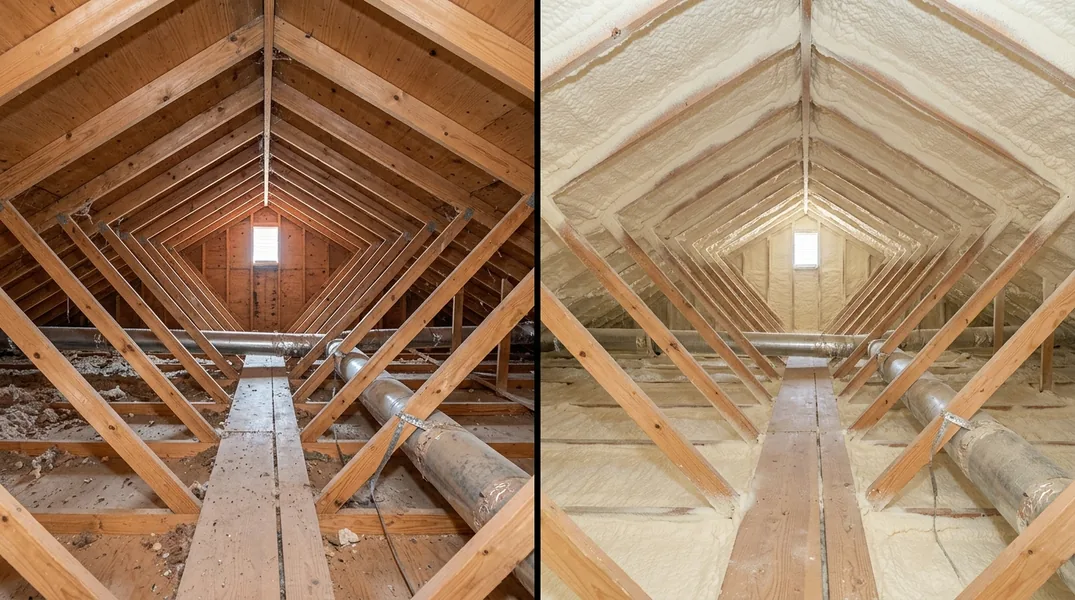
Why Mid-Century Brick Ranches in Midland Need Modern Insulation
The charming mid-century brick ranches scattered throughout Midland have character, solid construction, and timeless appeal. But many of these homes were built in an era when energy efficiency wasn't a priority. If you own one of these classic properties, you've probably noticed your heating and cooling bills climbing higher each season, especially during Midland's scorching summers and unpredictable winters.
The root cause is simple: your attic and walls lack adequate insulation by today's standards. Original fiberglass batts have settled, compressed, or deteriorated over decades. Air leaks around rafters, joists, and penetrations create thermal pathways that make your HVAC system work overtime. This is where modern Attic Spray Foam Insulation comes in. Unlike traditional insulation methods, spray foam creates a seamless thermal and air barrier that addresses both insulation and air sealing simultaneously, making it particularly effective for older homes with irregular framing and hidden gaps.
Is Spray Foam Insulation Worth It for Your Midland Home?
When homeowners ask 'is spray foam insulation worth it,' they're really asking three questions: Will it save me money? Will it improve comfort? Will it last? The answer to all three is yes, but the specifics matter for your situation. Spray foam insulation provides an R-value of 3.5 to 7 per inch, depending on the type. More importantly, it seals air leaks that traditional batts simply cannot address. In Midland's climate, where temperature swings are dramatic and cooling costs dominate summer bills, the energy savings from spray foam typically recover the investment within 5 to 10 years.
Beyond energy savings, spray foam insulation adds structural integrity to your home. It reduces outside noise penetration, controls moisture and condensation, and creates a more consistent indoor temperature year-round. For mid-century brick ranches with poor original insulation, these benefits are substantial. Homeowners commonly report 20 to 30 percent reductions in heating and cooling costs after upgrading to spray foam. That's real money back in your pocket every month, plus the comfort of not having hot spots in summer or cold corners in winter.
Is Spray Foam Insulation Safe? Understanding Health and Safety Concerns
Safety is a legitimate question when considering any building material. The short answer: yes, spray foam insulation is safe when installed properly by trained professionals. However, 'properly' is the operative word. During installation, spray foam releases isocyanate fumes that can irritate lungs and skin if workers and occupants are exposed. This is why professional application matters. Insured contractors follow strict safety protocols, including proper ventilation, personal protective equipment, and post-cure time before occupants re-enter treated areas.
Once cured (typically 24 to 48 hours), spray foam is inert and poses no ongoing health risk. The material doesn't off-gas continuously like some cheaper insulation products. Once fully cured, the foam is stable; follow the re-occupancy time your installer gives you before moving back in. What matters most is choosing a reputable, certified installer like Midland Spray Foam Insulation who understands application best practices and local building codes. Improper installation or using low-quality materials can lead to issues, which is why vetting your contractor is as important as the material itself.
Spray Foam Off Gassing and Curing: What to Expect
One of the most common concerns homeowners raise is spray foam off gassing. This typically refers to the odor and fumes released during and immediately after application. The smell can be strong and may persist for 24 to 72 hours depending on ventilation and temperature. This is normal and expected. The chemical reaction that causes the foam to expand and cure is what produces these odors. They are not dangerous if you're not present during application, but they are uncomfortable if you're home when work happens.
Professional installers manage this by ensuring proper ventilation during the cure period and recommending that occupants stay away from treated areas for at least 24 hours after application. Modern spray foam formulations have reduced odor profiles compared to older products, but some smell is inevitable. If you're sensitive to odors or have respiratory concerns, discuss timing with your installer. Many homeowners schedule spray foam installation when they can stay elsewhere briefly, which is a reasonable precaution. After the cure period is complete, there is no residual off gassing. The foam becomes a stable, inert barrier in your attic or walls.
Spray Foam Insulation Pros and Cons: A Balanced Look
Like any insulation method, spray foam has genuine advantages and real limitations. On the pro side, spray foam delivers superior air sealing, high R-value per inch, moisture resistance, and long-term durability. It conforms to irregular spaces in older homes, fills gaps around pipes and electrical penetrations, and creates a continuous thermal envelope. It also resists settling and degradation far better than fiberglass. For mid-century brick ranches with complex framing, these benefits are substantial and often justify the investment.
The cons include higher upfront pricing compared to traditional insulation, the need for professional installation, and potential off gassing during and shortly after application. Spray foam is also permanent once installed, so any future modifications to your attic or walls become more difficult. Additionally, some homeowners worry about moisture trapping, though this concern is largely mitigated with proper ventilation design. Closed Cell Spray Foam Insulation is more moisture-resistant than Open Cell Spray Foam Insulation, making it better for attics in humid climates.
The real question is whether the pros outweigh the cons for your specific home and budget. For most Midland homeowners with older, poorly insulated homes, the answer is yes. The energy savings, comfort improvements, and durability make spray foam a worthwhile investment over the 20 to 30 year lifespan of the material.
Spray Foam Insulation Problems: Recognizing and Avoiding Them
While spray foam is generally reliable, installation mistakes and poor planning can create problems. The most common issues include improper mixing ratios (which affects curing), inadequate ventilation during application, and incorrect density or thickness. These errors typically result in incomplete coverage, reduced R-value, or persistent odors. Another issue arises when homeowners choose unqualified installers who cut corners on safety or application technique. This is why working with established, certified professionals is non-negotiable.
Other potential problems include difficulty with future repairs or renovations in spray foam areas, and rare cases of allergic sensitivity to uncured foam (which is why occupants should vacate during application). Some homeowners also report that foam can shift or settle slightly over decades if installed too thickly or in certain orientations, though this is uncommon. The best way to avoid these problems is to hire experienced contractors, ensure proper ventilation and cure time, and get clear communication about expectations before work begins. If you're considering spray foam for your mid-century ranch in Midland, request references, verify licensing, and ask detailed questions about their process.
Choosing the Right Spray Foam Type for Your Midland Attic
Two primary types of spray foam are available: closed-cell and open-cell. Closed-cell foam has a higher R-value (about 6 to 7 per inch), provides excellent moisture resistance, and offers superior structural strength. It's ideal for attics, crawl spaces, and exterior walls where moisture or vapor barrier performance matters. Open-cell foam is lighter, less expensive, and has an R-value of about 3.5 per inch. It's breathable and works well in interior walls or attics with proper ventilation. For most mid-century brick ranches in Midland, closed-cell spray foam in the attic delivers better performance and peace of mind, especially given our climate's temperature extremes.
For walls, Wall & Injection Foam Insulation is often the best choice because it retrofits into existing cavities without major demolition. This is particularly valuable for older homes where you want to improve insulation without compromising original character. Your contractor should evaluate your home's specific needs, including moisture exposure, existing ventilation, and building code requirements, to recommend the right product and application method.
Getting Started: Your Free Estimate for Spray Foam in Midland
If you own a mid-century brick ranch in Midland and you're tired of high energy bills and inconsistent temperatures, spray foam insulation deserves serious consideration. The first step is understanding your home's current insulation condition and what spray foam can accomplish. Midland Spray Foam Insulation offers a thorough evaluation and free estimate so you can make an informed decision without obligation.
During a consultation, our team will inspect your attic and walls, identify air leaks and insulation gaps, discuss your comfort and budget goals, and explain which spray foam type and application method makes sense for your home. We'll answer your questions about safety, off gassing, durability, and cost. We're here to help you understand whether spray foam is the right choice and to deliver professional installation if you decide to move forward. Call us at (432) 400-5155 or visit our website to schedule your free estimate today. Your home's comfort and efficiency are worth the conversation.
Looking for a professional spray foam insulation contractor in Midland? Midland Spray Foam Insulation responds fast for all your spray foam insulation needs.
Get a Free Quote