Understanding Climate Zone 3B and Midland's Unique Insulation Needs
Midland sits squarely in IECC Climate Zone 3B, a classification that tells us a lot about the insulation strategy your home actually needs. Unlike the humid Southeast or the bitter-cold North, Zone 3B is characterized by hot summers and mild winters, with relatively low humidity year-round. This means your attic faces a fundamentally different challenge than homes in other regions: intense solar heat gain in summer, not moisture infiltration or extreme cold.
Most homeowners don't realize that cookie-cutter insulation advice doesn't apply to Midland. The traditional fiberglass batts and blown-in cellulose that work well in humid climates or cold zones can actually underperform in your area because they don't address the real enemy: relentless daytime heat that radiates through your roof. When outdoor temperatures regularly exceed 95 degrees Fahrenheit, your attic can reach 150 degrees or higher. That temperature differential drives heat directly into your living spaces, making air conditioning work overtime and inflating energy bills. This is where Attic Spray Foam Insulation becomes not just an upgrade, but a necessity.
How Spray Foam Outperforms Traditional Insulation in Zone 3B
Spray foam insulation creates an air-tight thermal barrier that traditional batts simply cannot match. When a technician applies Closed Cell Spray Foam Insulation to your attic, it expands to fill every cavity, crack, and void in your framing. This complete seal prevents warm air from finding pathways into your home, which is critical in a climate where the temperature outside can be 50 degrees hotter than your thermostat setting. Fiberglass batts, by contrast, leave gaps around electrical wiring, plumbing, and framing members. Over time, those gaps become highways for heat transfer.
The R-value per inch is only part of the story. Closed Cell Spray Foam Insulation typically delivers R-6 to R-7 per inch, while fiberglass offers around R-3.2. But the real advantage is that spray foam's air-sealing properties eliminate convection losses. In Zone 3B's dry climate, where humidity isn't the primary concern, closed-cell foam's vapor barrier also prevents any outside air infiltration that could carry heat into your attic. Your air conditioning system won't have to fight phantom heat leaks, meaning lower monthly utility costs and a more comfortable home year-round.
The Air-Sealing Advantage: Why Gaps Matter More Than You Think
One of the biggest reasons homeowners in Midland see immediate energy savings after spray foam installation is that the foam seals air leaks that conventional insulation leaves wide open. A single gap the size of a quarter in your attic can let in as much unconditioned air as leaving a window partially open all day. When your attic temperature is 150 degrees and your home is set to 72 degrees, those tiny openings become energy vampires. Fiberglass batts are installed between joists and rafters, but they don't seal the gaps where wood meets drywall, where electrical boxes penetrate the ceiling, or where plumbing vents pass through.
Spray foam is applied as a liquid that expands and hardens, conforming perfectly to every surface irregularity. This means your attic becomes a true thermal envelope. In a hot, dry climate like Zone 3B, this air-sealing benefit directly translates to reduced cooling loads. Your HVAC system cycles less frequently, your compressor runs fewer hours, and your energy bill reflects the improvement. Many homeowners report 15 to 30 percent reductions in cooling costs after upgrading their attic insulation to spray foam, particularly if their previous insulation was old or poorly installed.
Spray Foam Beyond the Attic: Crawl Space and Pier-and-Beam Considerations
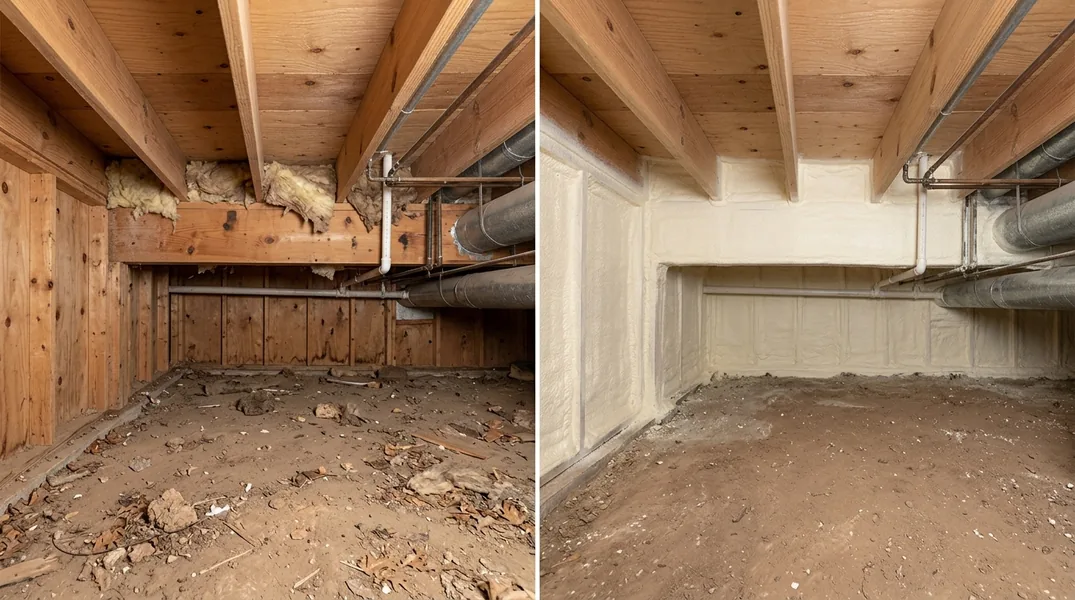
While attic insulation is the priority in Zone 3B, many Midland homes also benefit from addressing foundation areas. If your home is built on a pier-and-beam foundation with exposed underside, the space between the ground and your floor joists is another thermal weak point. Heat radiating from the ground and outside air flowing through that cavity can warm your floors and make your cooling system work harder. Open Cell Spray Foam Insulation is often an excellent choice for these applications because it provides good insulation value while remaining more cost-effective than closed-cell alternatives in non-critical areas.
For homes with crawl spaces, proper insulation is equally important. Open Cell Spray Foam Insulation applied to crawl space walls and band joists creates a thermal barrier that prevents heat transfer from the ground and outside air from affecting your living spaces above. Whether you're dealing with a traditional crawl space or a pier-and-beam structure, addressing these areas in combination with attic insulation gives you a complete thermal envelope. The best insulation for crawl spaces in a hot climate is one that seals air leaks while allowing any moisture to escape, and spray foam delivers on both fronts when applied correctly.
Attic Spray Foam Insulation Cost in Midland: What to Budget
The pricing for Attic Spray Foam Insulation varies depending on your attic size, current insulation condition, and whether you choose open-cell or closed-cell foam. In general, spray foam costs more upfront than traditional batts or blown-in insulation, typically ranging from $1.50 to $3.00 per square foot installed, depending on depth and foam type. For a typical 1,500-square-foot attic in Midland, you might invest between $2,250 and $4,500. While that's a meaningful expense, the energy savings in our hot climate often recover the investment in 5 to 8 years, after which you're simply saving money on cooling costs.
The long-term value is substantial. Spray foam lasts the life of your home, doesn't settle or degrade like fiberglass, and actually increases your home's resale value by improving energy efficiency and comfort. Many homeowners also find that the improved comfort during our scorching summers makes the investment worthwhile immediately. If you're concerned about pricing or want to understand the exact cost for your specific home, Midland Spray Foam Insulation offers a free estimate with no obligation. Call us at (432) 400-5155 to discuss your project.
Getting Started: Attic Spray Foam Insulation Near Me
If you're a homeowner in Midland ready to stop fighting the heat and start enjoying a cooler, more efficient home, the next step is a professional assessment. A qualified spray foam contractor will evaluate your current attic condition, identify air leaks and thermal weak points, and recommend the best insulation strategy for your home's specific needs. They'll explain whether closed-cell or open-cell foam makes sense for your situation, discuss any ventilation considerations, and provide a clear pricing breakdown so you know exactly what to expect.
Midland Spray Foam Insulation specializes in helping homeowners in this region solve the exact thermal challenges that Zone 3B presents. We understand that your attic insulation needs are different from homes in other climates, and we apply that expertise to every project. Whether you're building new, upgrading an existing home, or dealing with cold floors from a pier-and-beam foundation, we have solutions tailored to Midland's hot, dry climate. Contact us today at (432) 400-5155 or request a free estimate online. Let's get your home properly insulated so you can enjoy lower energy bills and year-round comfort.
Looking for a professional spray foam insulation contractor in Midland? Midland Spray Foam Insulation responds fast for all your spray foam insulation needs.
Get a Free Quote